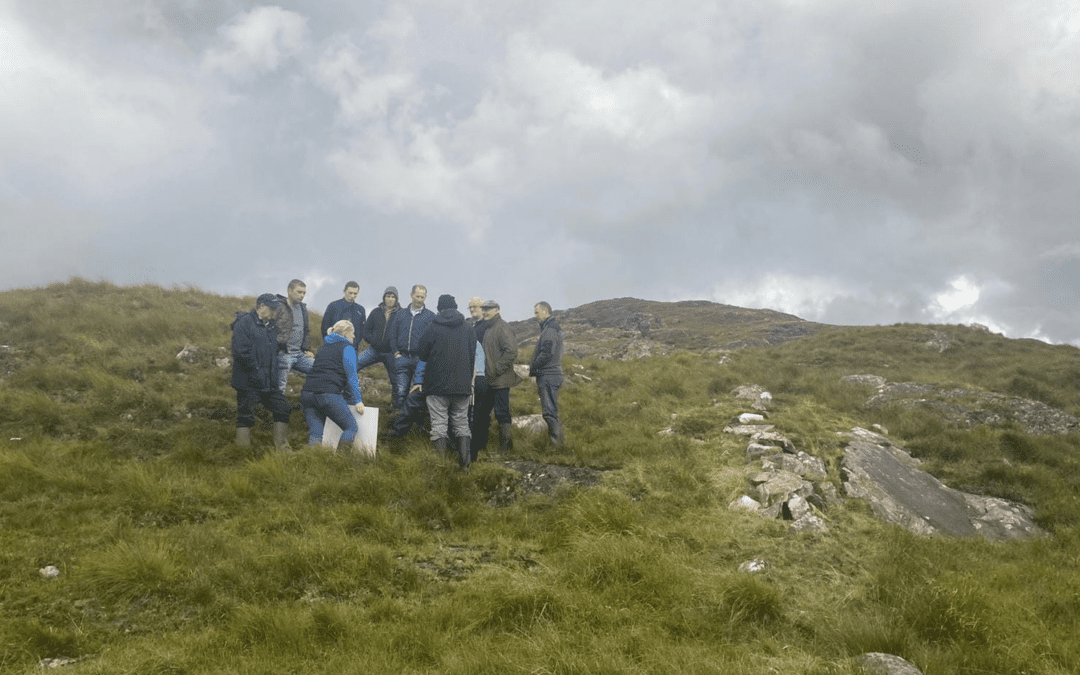
The Comeragh Upland Communities EIP Project featured field-based education activities to enhance farmer and community education on the management of commonage and upland habitats. Due to the nature of commonage and upland areas as remote and co-owned, strategies to provide habitat management education are particularly relevant and necessary considering the degradation of these ecosystems and complex process of their management. However, this may also be relevant to other habitats such as remote wetlands.
In this EIP Project, the field-based education took the form of three site visits, six school visits, and six community training sessions (‘Tuesday Tea Talks’). Post-project activities have also continued in the form of farm succession workshops in collaboration with the Bioregioning South East of Waterford. The field-based education was a key element to the training and community engagement of the project, creating inspiration and pride for farmers, as well as combatting social disconnect and loneliness among the community.
- The site-visits allowed for experiential knowledge sharing as part of the education of farmers in managing their upland habitats. The fourteen participating farmers visited three sites involved in upland research and activities, where they could see and experience new ideas and approaches to multi-functional upland management. The first group visit was to CAFRE’s Hill Farm Centre to focus on their flock breeding programme and on upland ecosystem services. The second visit was to an upland commonage site where a shareholder farmer explained his work on bracken control. The third visit was to the Pearl Mussel EIP and the Wild Atlantic Nature LIFE projects, where farmers gained insight into grazing systems and blanket bog management. The sites were selected by the Project Manager based on his previous experience and insights in upland habitat management, and because they were seen as progressive case studies that were novel to the participating farmers.
- The school-visits were led by farmers, allowing for creative freedom in terms of how they showed the students what is involved in upland farming. Six local primary schools visited three different farms and the visits were supported by Teagasc. Farmers covered different topics on the visits, including upland flock management (e.g., health and shearing), the plants on the mountain, and sheepdog skills. The visits proved to be a simple but effective community engagement strategy.
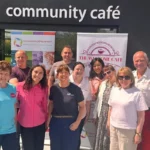
- The ‘Tuesday Tea Talk’ series were training sessions open to both farmers and the non-farmer community and focused on the area’s natural and cultural heritage elements. Speakers included Dr Brendan Dunford, who led the award-winning BurrenLIFE Project (2005-2010) and the focus of sessions ranged from the local folklore to the geography, geology, and geomorphology of the area. The sessions were hosted in community venues and achieved a diverse and high number of attendees (average 40 people), proving their value as a mechanism for building relationships between farmers and the broader Comeragh upland community.
Ireland currently lacks farm-based, in-person education that bridges the gap between farming and non-farming communities. While there are opportunities for engaging in discussion groups and farm-advisory services, supported and accessible education activities that are delivered in an experiential way are additionally needed for increasing public awareness of agri-food systems, and to enhance farmer to farmer knowledge sharing.
The methodology of field-based education adopted in the EIP Project is described in the publicly available EIP Technical report.
For more information, contact Leo at leo@erinn.eu.