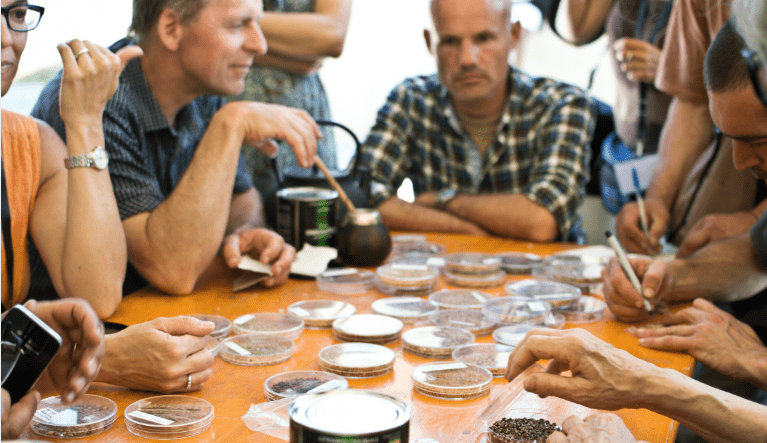
In the modern agricultural landscape, traditional primary producers frequently lack a deep, contextual understanding of why complex new environmental policy requirements are introduced. This knowledge gap often creates resistance to change or confusion during policy transitions. To directly address this challenge, a structured methodology was developed in the Curaíoct na Phobáil EIP to provide tailored, bottom-up training that seamlessly connects practical, on-farm ecological actions with upcoming Common Agricultural Policy (CAP) requirements.
The core innovation of this approach lies in integrating policy education directly into hands-on agricultural training rather than keeping it as an isolated administrative exercise. By deliberately normalising new scheme terminology during practical fieldwork, the training ensures that participants thoroughly grasp both the ecological 'why' and the bureaucratic 'how' of modern habitat management. Demystifying this language helps build trust, creating long-lasting attitude shifts across the agricultural community. Ultimately, this comprehensive preparation ensures that farmers become resilient, highly informed, and proactively equipped to maximise their financial benefits under newer results-based payment schemes.
Within a national context, this training model offers significant strategic opportunities for Ireland. It provides a vital blueprint for streamlining the transition of rural communities into the complex CAP 2023–2027 framework while directly aligning local agricultural management with the ambitious targets of the national Climate Action Plan.
For the individual producer, this information transforms complex directives into actionable, field-level strategy. Farmers can actively engage in these specialised, peer-supported training sessions to demystify complex European policy jargon and overcome the traditional generational gap found in standard advisory loops. By doing so, they are empowered to strategically plan targeted, sustainable farm actions that satisfy future environmental payment criteria, ensuring their long-term economic viability and increasing their overall land scores.
For more information about this innovation, contact Leo at leo@erinn.eu.