Intensive agriculture is a primary driver of biodiversity loss, which in turn negatively affects essential ecosystem services like pollination and natural pest control that are vital for agricultural production. A key challenge is that landscape features that support biodiversity, such as smaller fields and uncultivated areas, are often removed to increase cultivated land, creating a conflict between farm economics and environmental health
To address this, the ECODEAL project developed an open-access, spatially explicit ecosystem service model. This innovative tool functions as a mapping system, predicting where ecosystem services are strong or weak by simulating wild pollinator population dynamics based on landscape data. The model was designed to analyse how the quantity and quality of green infrastructure impact crop pollination and pest control, helping to fill knowledge gaps in integrating agricultural production with biodiversity conservation.
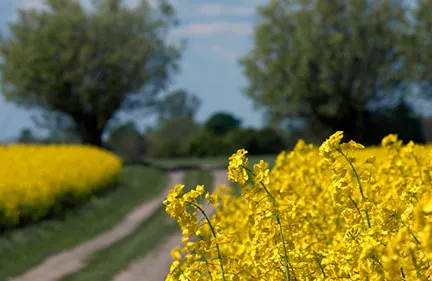
The model's results show that increasing green infrastructure—such as hedgerows, flower-strips, and grassy field margins—can enhance pollination and biological pest control in nearby crops. A key finding is that green infrastructure should also be considered to include mosaics of smaller arable fields, as larger fields support less biodiversity and reduce ecosystem services. The model provides a way to measure the effectiveness of agri-environment schemes and has the potential to inform evidence-based advice for farmers, advisors, and policymakers, as seen by its adoption and further development in the UK.
This innovation is highly relevant for Ireland, where only one-third of the country's extensive hedgerow network is in good condition, often impacted by agricultural expansion. The model can provide critical evidence to support schemes like the All-Ireland Pollinator Plan and EIP projects by quantifying the benefits of high-quality green infrastructure. This aligns with the National Strategy for Horticulture 2023-2027, specifically its aims for research, development, innovation, and diversification.
Farmers can use these findings to understand that enhancing on-farm green infrastructure can directly benefit their crops. The results indicate that actions like improving the quality of hedgerows and field margins can lead to better pollination and pest control. This evidence empowers farmers to make informed land management decisions that can boost biodiversity and the resilience of their farming system, while also providing a basis for participation in supportive eco-schemes.
Find out more about this innovation by contacting Leo at leo@erinn.eu.
The ecosystem-service model used in the ECODEAL project is available as open-access, available here.