One of the activities undertaken by the Ballymoney Stream Catchment Biodiversity Pilot EIP Project was to address the large-scale round-up use in the area by promoting alternative, chemical-free gardening methods such as cutting briars and nettles where needed instead of spraying.
The project coordinator met with project partners (farmers, landowners) and members of the public during visits and group public meetings to raise awareness of the risk of spraying to pollinators, and to gauge their interest in participating in a chemical-free trial.
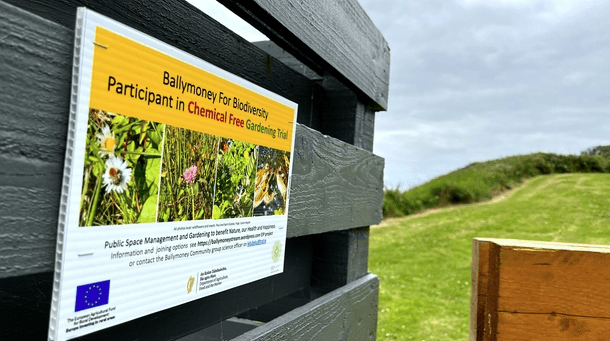
Twenty-eight landowners in the area joined the chemical free gardening and grounds trial. While it was initially set for 6-weeks, it was extended for the duration of the project. “No-spray” pledge signs were created to indicate participation in the trial. These signs were co-designed with the community, using participants own images of wildlife in their area or garden such as insects and frogs. The content on the sign was also co-created, as were the decisions on the materials used for the sign to ensure highest levels of sustainability. The local printer used new eco-friendly water-based inks on a new recyclable plastic board which they trialled in different conditions to ensure durability of the signs.
Participants displayed their “No-Spray” pledge as signs on their entrance gates or walls. It was mandatory to have their pledge signs on the roadside or exterior of their land visible to the public, as they could be withdrawn by the project team if the participant did spray. The signs were matched by a noticeable reduction in the brown ‘Round-upped’ ground seen along the roadsides and in community areas.
The lowest levels of participation and buy-in was among holiday makers who employed contract gardeners; several of whom were advised that ‘no spray’ was not commercially viable and would cost more. However, one contractor agreed to try non-chemical gardening, joined by a second at the project close. Two participating farmers extended the trial to also their yard areas, cutting briars and nettles where needed instead of spraying.
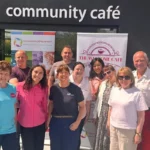
This campaign was accompanied by a public training session delivered by an ecologist who provided information on the importance of pollinators, the reason behind why chemical sprays damage pollinator and biodiversity, and the value of the “No-spray” campaign.
The trial was monitored closely by the project coordinator through site visits. The designed signage was well received by the community. At the end of the project, more than half of the stream plain stage private gardens and all village catchment community ground had joined the campaign and adopted spray free gardening methods.
While momentum has been lost since project completion due to lack of time and resources to continue promotion of this campaign, there is potential to replicate it in wider areas.
Find out more about this innovation by contacting Leo on leo@erinn.eu.