
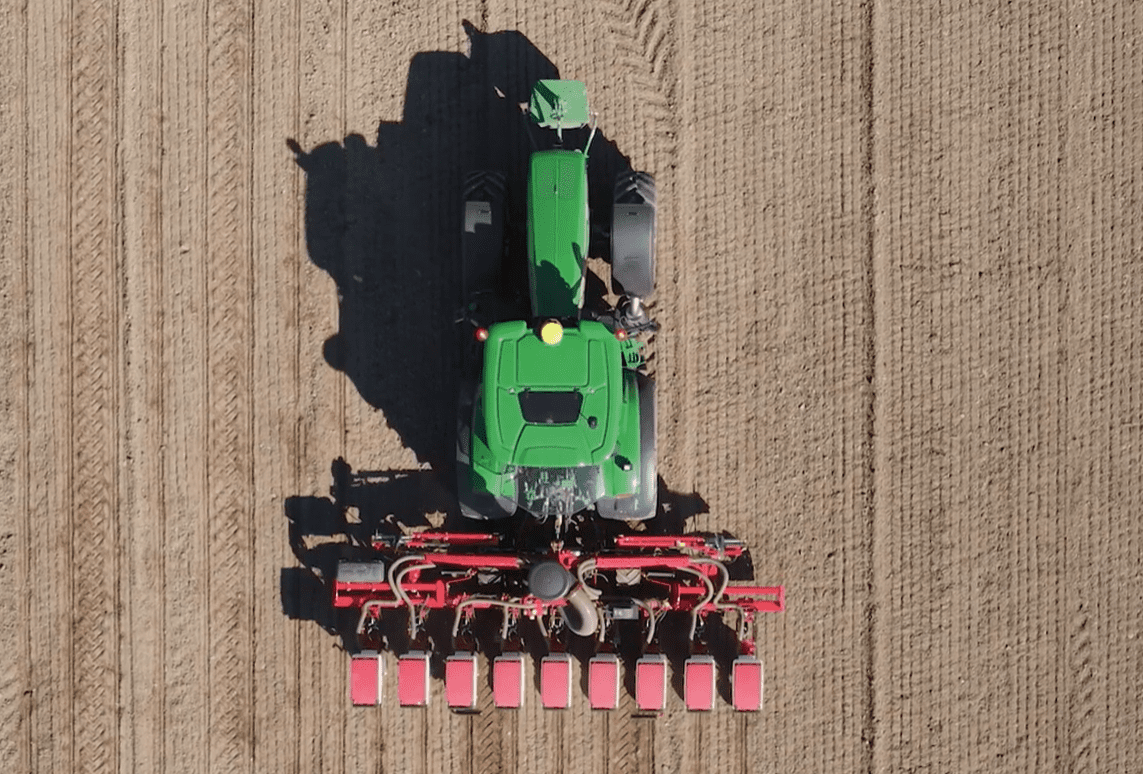
Transitioning to organic farming presents unique hurdles, especially when managing weeds without the safety net of chemical herbicides. The Organic Tillage and Vegetable (OTV) EIP project addresses these critical weed management challenges for organic growers by validating innovative weeding technologies under Irish conditions. Its primary goal is to demonstrate enhanced collaboration between organic tillage and vegetable producers, focusing on integrated weed management best practices. The EIP will empower farmers to increase production sustainability and more effectively exploit organic market opportunities.
Manging without chemicals
In conventional agriculture, chemical herbicides often provide a quick and easy solution to weed pressure. Organic farmers simply do not have that luxury. Instead, weed control in organic tillage and vegetable production systems requires meticulous pre-planning and a heavy reliance on cultural and mechanical methods.
Furthermore, the current state of organic tillage rotations is largely uniform. Oats currently represent about 70% of organic tillage crops in Ireland, a reliance that is not sustainable in the long term. Expanding crop diversity is vital, not just for soil health, but also to reduce Ireland’s reliance on imported fruits and vegetables. Ireland currently imports over 70% of its organic fruit and vegetables. Unlocking the ability to grow diverse crops locally requires viable, non-chemical weed management solutions.
Innovative technology in action
Specialised organic farming equipment is expensive, creating a steep barrier to entry for organic growers. The OTV project overcomes this by hiring advanced equipment, allowing farmers to trial it in their own fields without the upfront financial risk.
One practical example demonstrated in the project involves precision drilling beet seeds slightly deeper than usual. Days later, before the beet emerges, a tine harrow is run through the crop to uproot seedling weeds at the fragile "white thread" stage, leaving them to dry out on the soil surface.
Labour is another massive hurdle. It can account for approximately 60% of costs for small-seeded crops like carrots and onions, primarily due to manual hand-weeding. To combat this, the project is validating advanced technologies like camera-guided inter-row hoes. These machines facilitate precision weeding both in the row and between individual plants, drastically reducing or eliminating the need for expensive manual labour associate with weeding.
Collaboration and machinery sharing
Because this advanced technology requires significant capital investment, the project is evaluating effective machinery deployment options, including strategic sharing models for various farm scales. By sharing machinery, farmers gain access to specialised tools exactly when they need them while spreading the financial burden across multiple operations.
The initiative brings together a collaborative group of seven farmers: four primarily organic tillage farmers and three organic vegetable farmers. This diverse mix aims to create mutual co-benefits, with the shared experience and knowledge within the group being an invaluable part of the project.
Conclusion
The Organic Tillage and Vegetable EIP is a transformative initiative that goes far beyond simply testing new weeders. By developing site-specific cropping plans, demonstrating machinery-sharing models, and fostering cross-sector collaboration, it gives growers the mechanical options they need to safely extend their crop rotations. Ultimately, the project equips Irish farmers with the confidence and tools required to build a more resilient, profitable, and diverse organic agricultural sector.
Check our Innovation Spotlight video on the Organic Tillage and Vegetable EIP here.