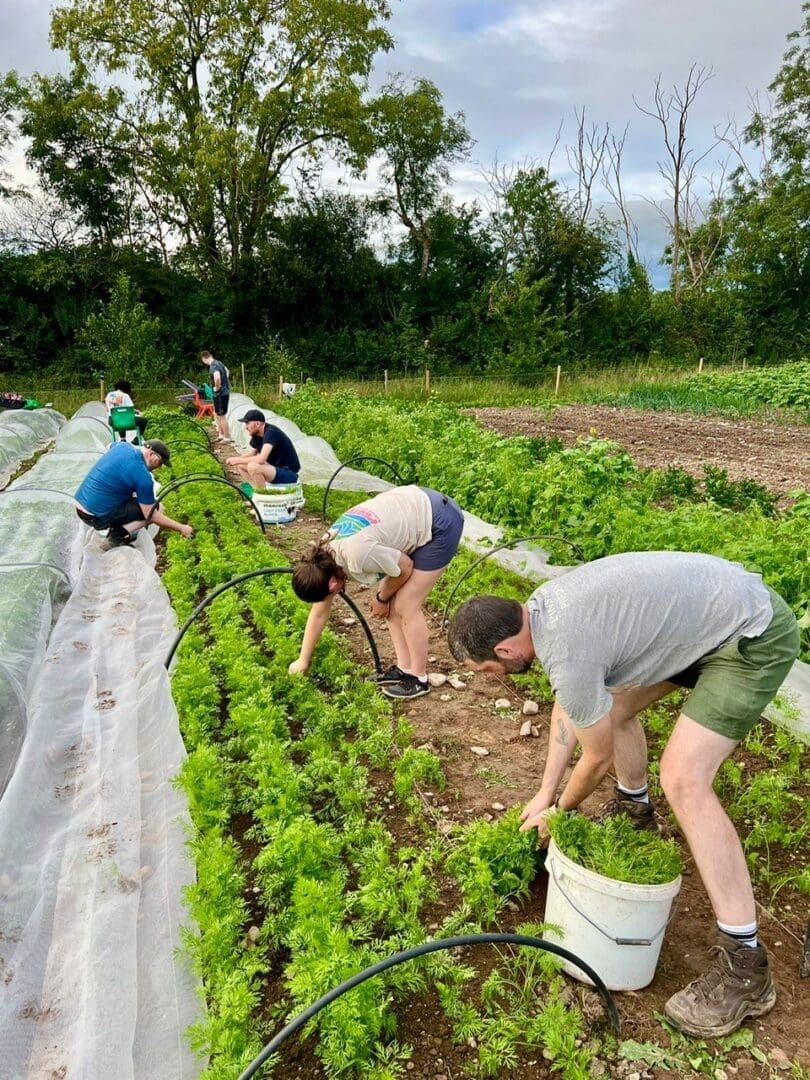
Sustaining a Farm Through Communinty: Our Farm at Bushy Park
Name:
Our Farm at Bushy Park
Location:
East Cork
Farm Type:
Our Farm is a not-for-profit, community-owned, nature-friendly, circular economy farm.
Participants:
Currently 31 households
1. Introduction
A wide range of interesting and innovative activity is currently taking place in the Irish agricultural and rural space, but few projects challenge the traditional agricultural model of land ownership and production quite like ‘Our Farm’ at Bushy Park. John Murphy, an East Cork farmer and a team member of CAP Network Ireland, is redefining the relationship between the farmer, the land, and the local community.
Until a couple of years ago, John was a full-time, small-scale dairy farmer, milking 35 cows on his 45-acre holding. When he initially took over the farm in 2013, the imminent abolishment of milk quotas presented an industry-wide push for expansion, a path John was ready to take. However, his trajectory was drastically altered by a severe health scare in the early 2010s.
"While going through chemotherapy and surgery, my father had to come out of retirement to fill in. That really struck me how vulnerable my farm was being dependent on one person - me. I became very risk-averse and decided not to take on massive debts."
“I had a deal made with a neighbour and was going to the bank for a loan to upgrade my facilities when I was struck with cancer,” John recalls. “While going through chemotherapy and surgery, my father had to come out of retirement to fill in. That really struck me how vulnerable my farm was being dependent on one person—me. I became very risk-averse and decided not to take on massive debts.”
This stark realisation highlighted the extreme vulnerability inherent in John’s single-operator dairy model. In contrast to the broader dairy sector's expansionist mindset at the time, John decided to pivot toward a system designed for personal resilience, community reliance, and social connection. His journey would eventually lead to the creation of a pioneering, community-led, and not-for-profit model of cooperative farming.
2. The Inspiration - A New Ownership Model
The seed for the Our Farm model can be traced back to an exploratory trip John took in April 2024 to the Netherlands, facilitated by Bioregioning Southeast Ireland. The purpose of this journey was to examine the Herenboeren model, an innovative Dutch farming framework that completely restructures the economics of food production.
John realised that this approach answered critical questions surrounding economic, environmental, and social sustainability. The Dutch model functions on a closed-loop system where there are strictly no ‘customers’. Instead, approximately 200 households create a cooperative to lease or purchase land, subsequently employing a full-time farmer to grow their food. The farm becomes entirely self-contained, producing precisely enough food to support its members.
"I realised we could do this in Ireland to take the risk away from small farmers or those wanting a career in farming without buying land."
“I realised we could do this in Ireland to take the risk away from small farmers or those wanting a career in farming without buying land,” John explains.
Beyond addressing his personal health situation, John saw this as a viable and sustainable future for small-scale Irish farms. The cooperative structure removes immense financial and operational pressure from the individual farmer, effectively making the local community the primary stakeholders. It grants people a tangible share in the farm, allowing them to participate in decision-making and contributing farm labour. Furthermore, if there is excess land not required for food production, it’s returned to nature, with Nature-Based Solutions implemented to enhance local biodiversity.
3. Transitioning to Nature-Friendly Production
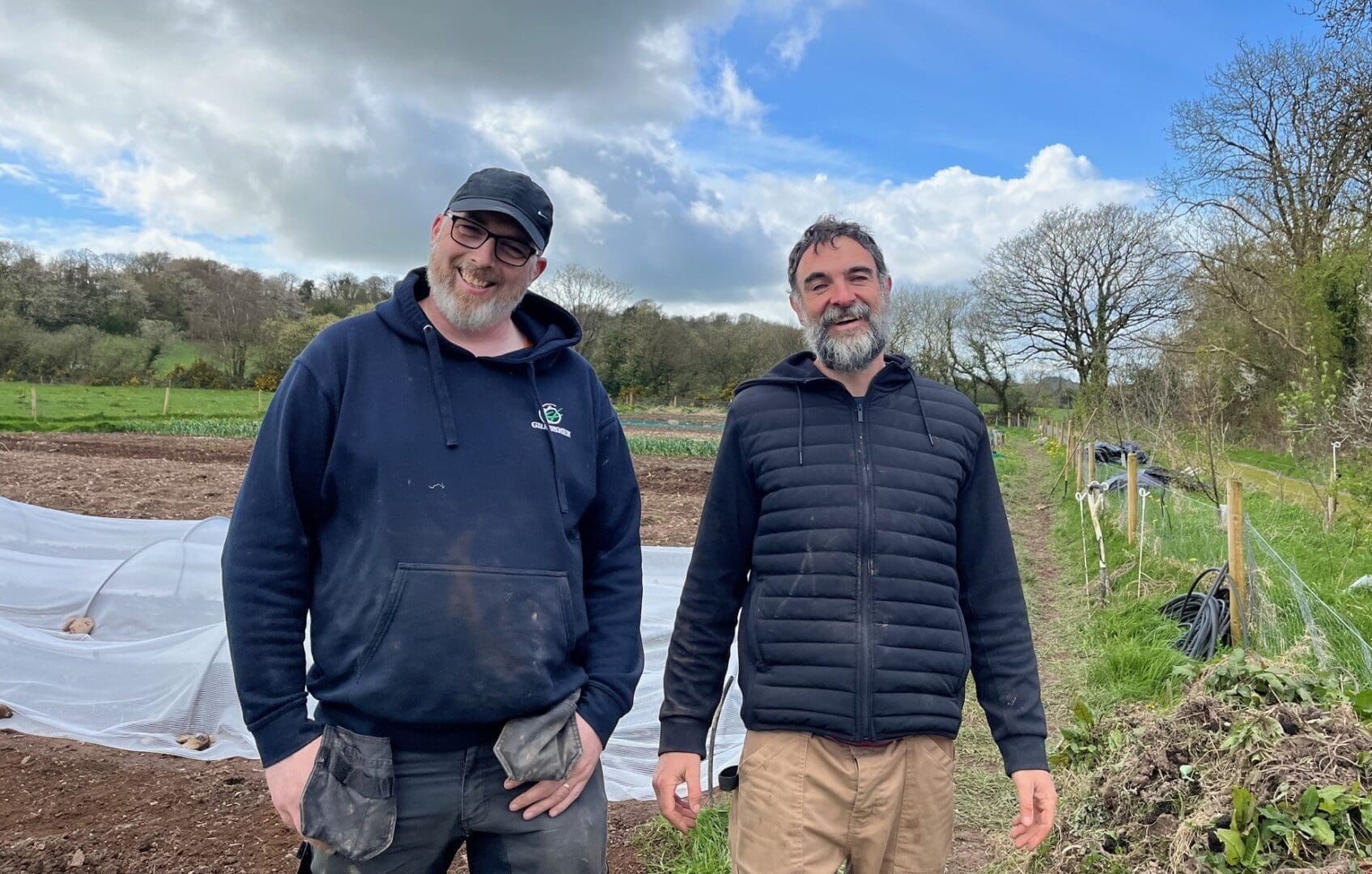
Transitioning from a 35-cow dairy enterprise to a community-led vegetable garden is a massive operational shift. John partnered with horticultural expert Roger Ahern, who brought vital experience from running his own market garden. With the help of a €5,000 grant from Bioregioning Southeast Ireland in 2024, the pair initiated a trial by committing a half-acre of John's farm to growing vegetables.
Despite the heavy workload, of managing Our Farm at Bushy Park along with contract heifer rearing and a full-time, off-farm job, the benefits for John have been significant. The deep isolation often felt in traditional farming has disappeared: “The biggest change is that it’s a much more social farm. I don't feel as isolated as I was when I was a dairy farmer. There are more people coming onto the farm helping with the growing, admin, and social media.”
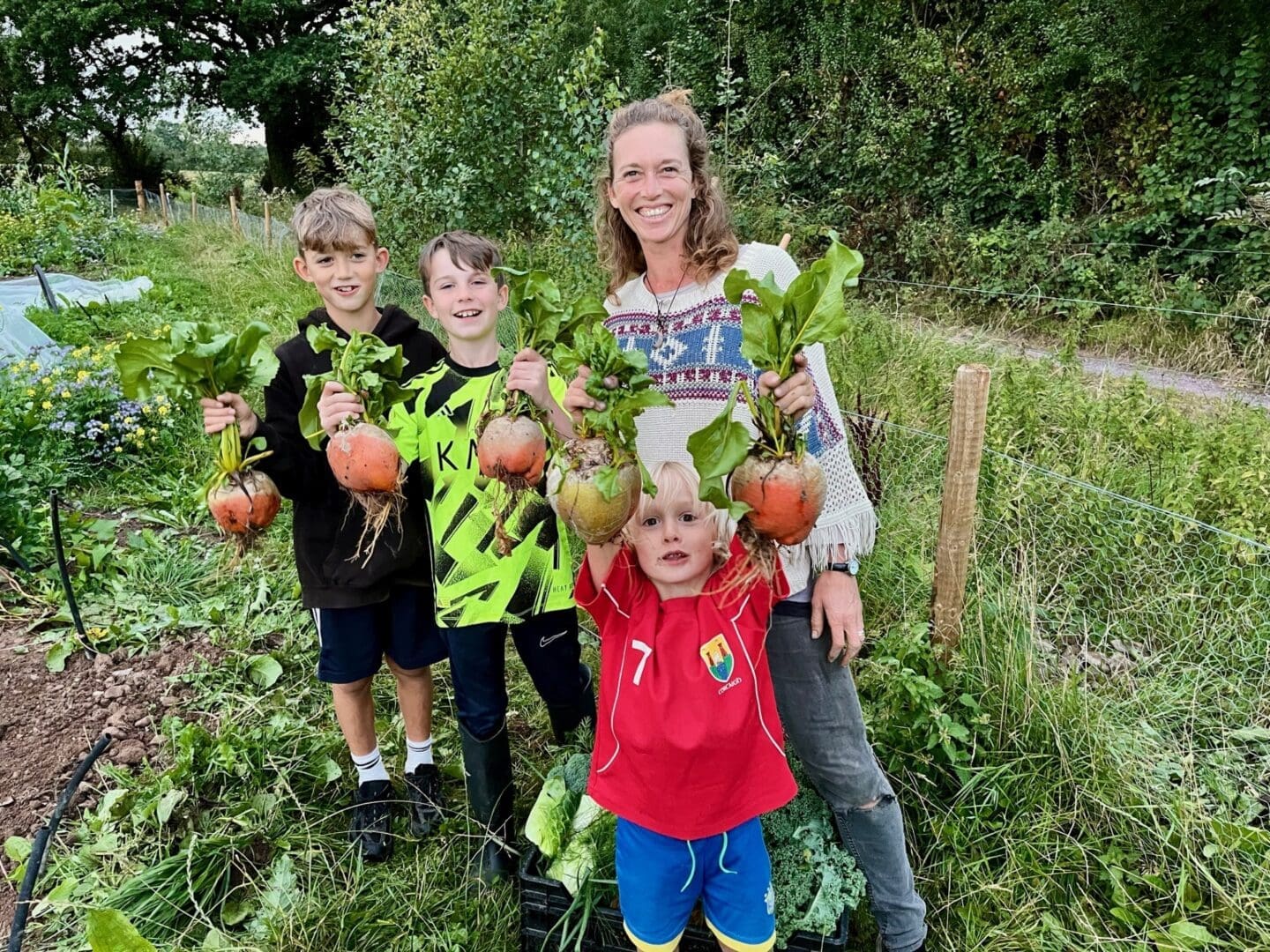
While John’s farm is not officially certified organic, the vegetables are grown organically. John has actively abstained from using pesticides or herbicides for the last 13 years. The Our Farm members see firsthand the organic practices that go into growing the produce on the farm, building absolute trust and no need for a formal organic certification. The farm currently grows 32 different types of vegetables.
4. The Importance of Community and Addressing the 'July Glut'
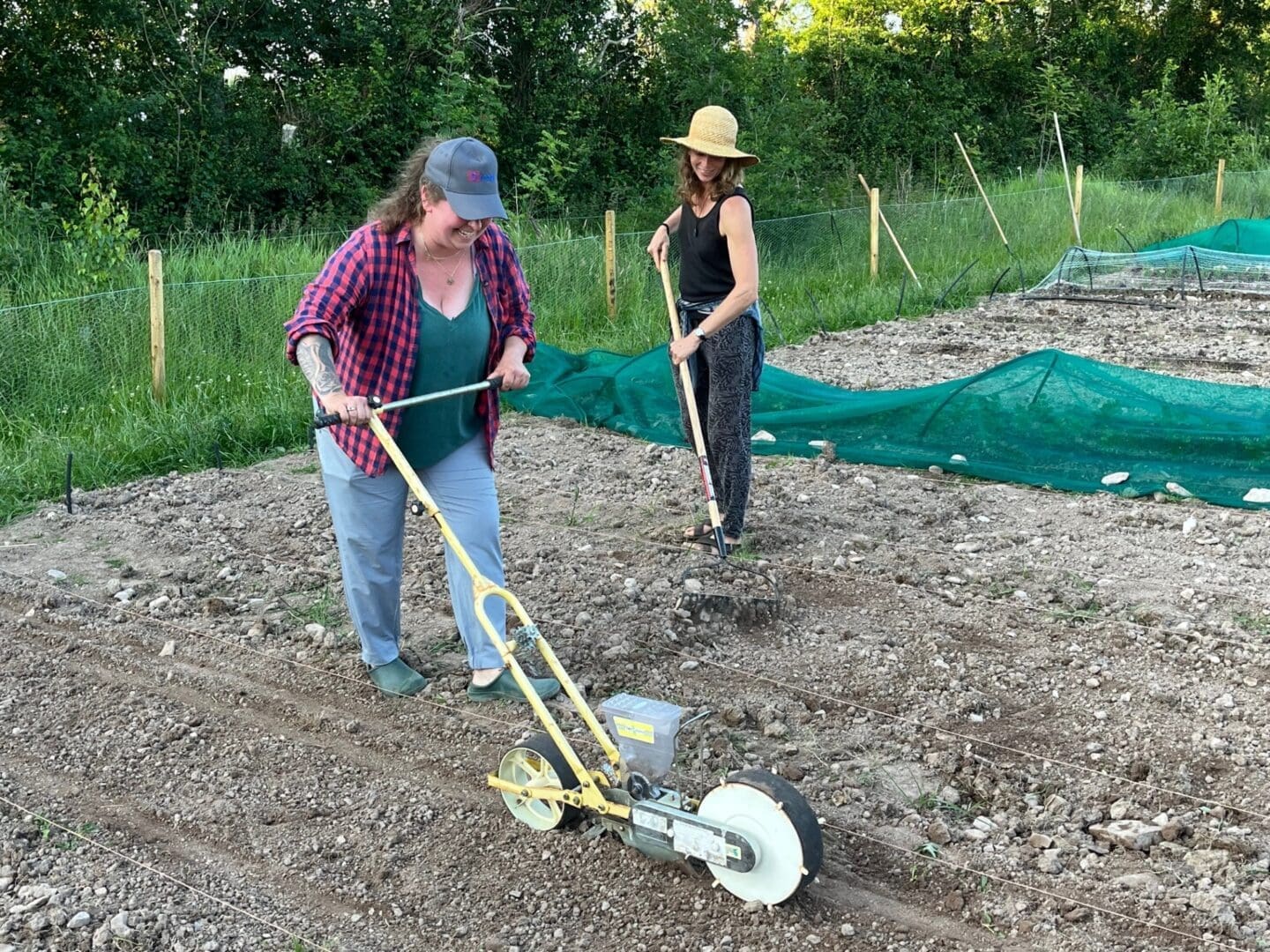
A core pillar of the Our Farm philosophy is the cultivation of a circular nutritional system for both the people and the land. In 2025, following local advertising, 17 households joined the initiative. By 2026, driven by the depletion of the initial Bioregioning grant, the project transitioned to a fully membership-driven financing model.
To John's surprise, the community response was very positive. Currently, 31 households are actively involved, each paying a one-time payment of €600 for farm access, with additional payments for the weekly food baskets - €32 for a family basket or €20 for a single household basket. Every single item produced on the farm is reserved exclusively for these participating members.
Innovation, however, requires learning from practical challenges. A major lesson emerged in the form of the ‘July Glut’. "A massive amount of produce arrived in July, but everyone went on holiday!” John recalls. “We realised we were missing the ‘homesteading’ knowledge—how to pickle, store, and process food.”
To combat this and reduce waste, the excess vegetables were added to the compost heap, returning essential nutrients to the soil for the following year. Additionally, one cooperative member applied for a Climate Action Fund grant from Cork County Council. This funding is intended to establish a community kitchen designed to process, pickle, and store excess produce. Our Farm at Bushy Park, along with other community entities, would have access to this community kitchen, if the grant is approved. This infrastructure would allow the farm to supply food to its members well after the growing season has concluded, smoothing out the peaks and troughs of seasonal agriculture.
5. The Financial Model - Designing for Resilience
"We stay away from the profit model because in the current system, the need for profit puts a ‘squeeze’ on everything - the producer, the animals, and biodiversity. This model lets everything breathe."
The financial architecture of the Our Farm model intentionally circumvents the traditional commercial agricultural market. As a strictly not-for-profit entity, it avoids the pressures of commercial scaling: “We stay away from the profit model because in the current system, the need for profit puts a ‘squeeze’ on everything—the producer, the animals, and biodiversity. This model lets everything breathe.” The pricing structure and business model were heavily informed by both Roger Ahern’s horticultural expertise and the foundational Dutch Herenboeren blueprint.
Support systems have been vital to this financial viability. Bioregioning Southeast Ireland (BioSEI) provided an initial ‘Just Do It’ grant of €8,000 (which carried no repayment obligation if the trial failed) and ongoing administrative, fiscal, and communications support for Our Farm at Busy Park. An indirect benefit for OFBP has also come from BioSEI's groundbreaking European trial of a 'bioregional basic income'. Supported by philanthropic funding from organisations like Commonland and Lifes2Good Foundation, BioSEI has been able to award Roger Ahern funds that provide an unconditional basic income of €17,000 annually for three years. This innovative safety net alleviates financial pressure for Roger who is the first food grower in the British Isles to receive a basic income"
6. Looking to the Future - Scaling and Policy Support
The big plan for Our Farm at Bushy Park is to scale from the current half-acre trial to fully utilise the entire 45-acre (20-hectare) property. The ultimate goal is to reach the 200-household capacity seen in the Netherlands, expanding production to include beef, pork, lamb, honey, and fruit. To facilitate this, plans are already in motion to purchase a polytunnel and a mobile hen house, which can be pulled by a tractor to provide the chickens with fresh pasture daily, while supplying eggs to the members. Ultimately, the farm hopes to provide 65% of its members' annual nutritional needs. The longer-term ambition is to replicate this model across the Southeast and the rest of Ireland.
Achieving this vision on a national scale requires robust policy support. John believes that the European Innovation Partnership (EIP) could be a critical funding source to help scale Our Farm in the future: “We need dedicated staff to help find land, handle recruitment, and manage the legal aspects for farmers.”
He advocates for the implementation of the CAP to fund capital infrastructure grants, habitat creation initiatives, and transitional programs to assist young farmers in adopting this mixed-farming mode. The local economic impact could be immense. If there were more ‘Our Farms’ across Ireland, not just John’s at Bushy Park, community members would spend more money directly within their local Our Farm area, boosting the local rural economy.
The next two years for Our Farm are dedicated to communication, recruitment, and scaling, including establishment of a formal cooperative structure. They are also pushing for the establishment of an Our Farm Foundation in Ireland to manage employment liabilities and operate training programs for new entrants. In the meantime, their influence continues to grow, with John and Roger now sitting on the Cork Food Policy Council to help the city explore local food sovereignty.
Despite initial scepticism from those who claimed, "Irish people aren't as progressive as the Dutch," John's proudest accomplishment is the trust of the 31 families who have invested their hard-earned money into the project. For John, the essence of the initiative is clear. When asked to define the farm’s philosophy in a single sentence, his response perfectly encapsulates this new model of agriculture: “Our Farm is a not-for-profit, community-owned, nature-friendly, circular economy farm.”
For those interested in following the journey or joining the waitlist, Our Farm at Bushy Park can be contacted on Facebook, Instagram, on the Bioregioning South East Ireland website or via email at ourfarmbushypark@gmail.com.
7. Image Gallery