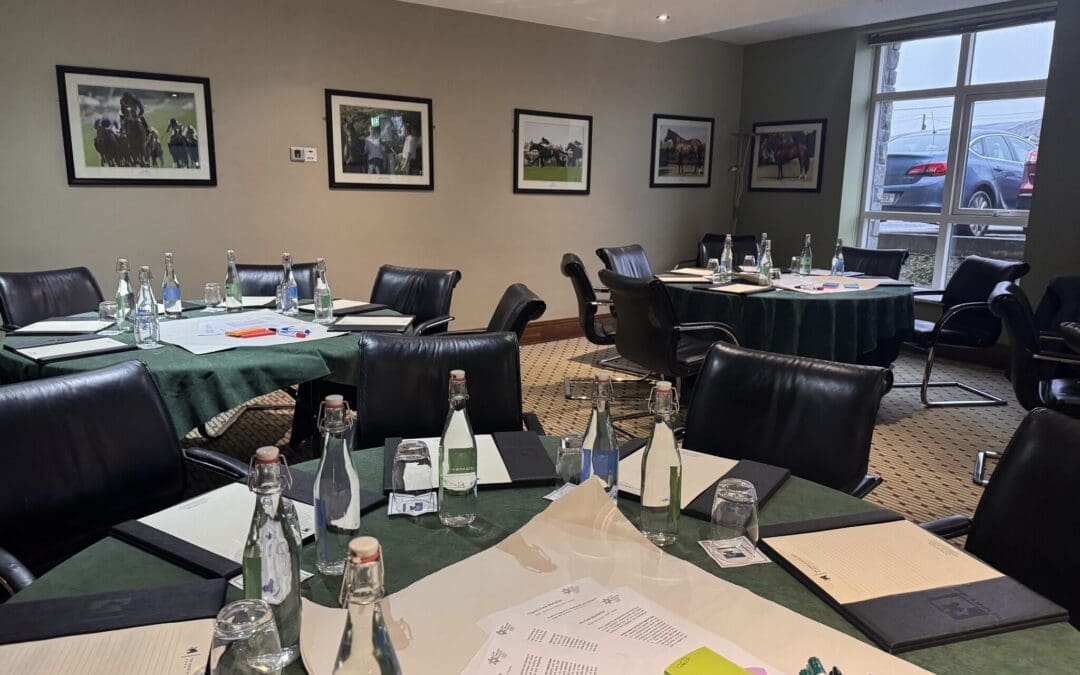
The Irish organic sector is currently navigating a period of rapid growth to meet the National Climate Action Plan's ambitious target of 10% organic agricultural land by 2030. Yet, this expansion has exposed a critical vulnerability, which is a severe shortage of domestically produced organic animal feed. 2024 projections suggested a need to import 30,000 tonnes for the 2024/25 winter alone. As part of CAP Network Ireland’s Organic Knowledge Transfer Pilot, a targeted workshop was hosted in Thurles on 26th January 2026 to map the regional feed supply challenges faced by farmers in the area. In partnership with Teagasc and organic farmers from the Mid-West Bio-district, the workshop aimed to identify the specific barriers to sourcing regional feed and capture co-designed, practical solutions to build a sustainable domestic supply chain.
Learning From European Research
The workshop was grounded in a proven European framework identified by the CAP Network Ireland Innovation Hub’s Organic Pilot. The Hub leveraged the Innovation Group approach pioneered by the Horizon 2020 project, OK-Net EcoFeed. This project successfully improved regional feed access across eight European countries by using a multi-actor methodology that united farmers, processors, advisors, and researchers to co-create and implement novel solutions to regional feed supply chain challenges for the organic pig and poultry sectors.
The workshop aimed to gather a knowledge base of challenges and solutions to present to the Department of Agriculture, Food and the Marine (DAFM), highlighting how a similar Innovation group approach could be a viable model for solving regional feed supply chain challenges in the Mid-West Bio-district, a region spanning Clare, Limerick, Tipperary, and Galway.
Mapping the Barriers
Workshop participants, comprising beef, sheep, dairy, and tillage farmers, detailed a fragmented system currently hampered by interconnected logistical, infrastructural, and financial roadblocks.
- Infrastructure and Processing Gaps
A primary obstacle is the deficit in physical infrastructure, particularly regarding storage. Organic tillage farmers frequently lack the necessary on-farm storage to hold grain until the winter months when demand peaks, forcing them to sell ‘straights’ (unmixed cereal grains) immediately post-harvest to manage cash flow. Conversely, livestock and dairy farmers often lack the specialised bins or shed space required to store bulk purchases. This is compounded by a lack of dedicated organic mills, leaving farmers reliant on a tiny number of micro-processors – organic tillage farmers who have invested in on-farm processing equipment to allow them to process grain from tillage farmers to sell to livestock farmers - who must charge premiums to recoup their high capital investment costs.
- Market Dynamics and Distortions
Market forces also skew the regional supply chain. Strong prices for organic oats from large commercial buyers, such as Flahavan’s, incentivise continuous oat production, which restricts crop variety and risks soil degradation. This dynamic ‘artificially’ inflates the price of other organic cereals like barley or wheat, as tillage farmers strive to get a similar price for their non-oat cereals. Furthermore, farmers reported that digital tools like the Organic Trading Hub are clunky and unoptimised for mobile use, driving many back to general platforms, like DoneDeal, that lack the necessary organic focus and traceability.
Co-created Solutions
Despite these hurdles, the second half of the workshop focused on co-designing solutions that an Innovation Group could potentially pilot. The most resounding recommendation from the farmers was the call to appoint a dedicated regional organic feed supply chain coordinator. This coordinator would act as a trusted broker, mapping regional grain demand and actively linking buyers directly with sellers.
Other co-designed solutions included:
- Virtual Co-ops: A farmer-owned digital platform allowing tillage farmers to pool grain yields for group selling and livestock farmers to pool demand for group buying to reduce transport costs.
- Shared Machinery (The CUMA Model): Inspired by the French system, this involves using mobile milling and processing units that move between farms, allowing tillage farmers to add value to their grain without massive individual capital investment.
- Regional Hubs: Developing drop-off and storage points at existing co-operatives to provide immediate logistical support and storage for a fee.
- Risk Mitigation: State-backed strategies, such as an underwritten grain aggregation pilot, to guarantee a minimum floor price for growers while new supply chain models are tested.
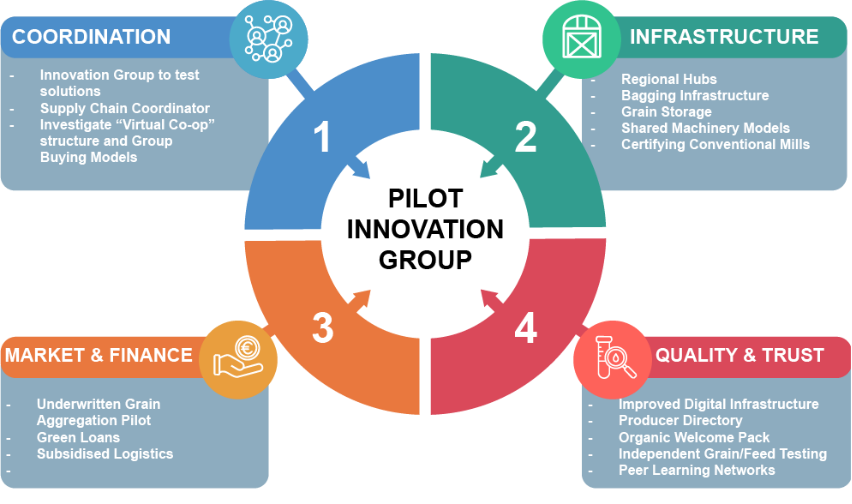
Figure 2: Co-designed feed supply chain solutions from farmers during the workshop
A Strategic Roadmap for the Mid-West
The workshop findings serve as a direct business case for DAFM to fund a Pilot Innovation Group in the Mid-West. This group, ideally managed through the existing structures of the Mid-West Bio-district project, would be tasked with strengthening the regional feed supply chain through a coordinated, bottom-up approach.
This Innovation Group would have a primary short-term mandate focusing on three achievable tasks: comprehensively mapping regional feed supply and demand, conducting a feasibility study to certify a local conventional mill for organic processing, and developing a regional producer directory and How-to feed sourcing guide. By establishing this official group, the Mid-West Bio-district could move from identifying feed supply problems to actively testing the novel solutions required to build a resilient, domestic organic feed supply chain.
For more information or to get involved with future workshops, please reach out to us via our helpdesk.