Model for analysing potential trade-offs between enhanced green infrastructure and smaller agricultural field sizes
Intensive agriculture often leads to larger field sizes, which can decrease biodiversity and reduce vital ecosystem services like pollination and natural pest control. This happens because the resources for wild pollinators are diminished, and the distance increases between crops and the habitats that provide these services. While larger fields can offer economic savings to farmers, the financial trade-offs of less effective pollination are often overlooked. There is a need to understand and balance the economic benefits of large fields with the ecological and economic value of the services provided by green infrastructure.
The innovation a simulation-based model designed to analyse the economic value of ecosystem services and the trade-offs associated with green infrastructure and agricultural field sizes. Developed during the ECODEAL project, this model uniquely integrates ecosystem service benefits not just with opportunity costs, but also with other costs related to smaller field sizes. By simulating various land-use scenarios, the model assesses how landscape structure influences pollination and estimates the private benefits for agricultural production. It specifically addresses the challenge of quantifying the economic and ecological effects of landscape changes, such as increasing field sizes.
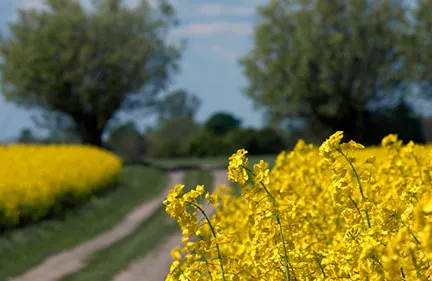
The model demonstrates that wild pollinators have a substantial economic importance for insect-pollinated crops like oilseed rape. It shows that green infrastructure, such as permanent green edges, supports these pollinators and can increase a farmer’s gross margins. The results highlight the necessity of assessing the influence of field size and green infrastructure on pollination to find an optimal balance that benefits both economic development and biodiversity conservation. This tool provides critical insights that can help shape future farming schemes and supports to better value and incentivise the protection of nature and green infrastructure.
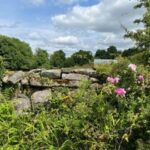
In Ireland, where there are approximately 700,000 kilometres of hedgerows, only a third are in good condition, with many being removed to increase usable agricultural land. While hedgerow cutting is restricted during the nesting season, their quality is not currently factored into new CAP schemes. This model aligns with the National Strategy for Horticulture’s goals for research, innovation, and diversification. There is an opportunity to use this bio-economic model to analyse current support schemes, identify gaps, and provide economic incentives for farmers to enhance green infrastructure, supporting initiatives like the All-Ireland Pollinator Plan.
This information is relevant as it highlights how maintaining and enhancing green infrastructure like hedgerows can directly support crop yields and increase gross margins through improved pollination.
Find out more about this innovation by contacting Leo on leo@erinn.eu.