It may go without saying, but it’s worth reminding ourselves that farming brings a wide range of emotions. Farmers routinely navigate uncertainty—from unpredictable weather to fluctuating markets. The capacity to endure and adapt is a strategic hallmark of farming life, and these traits can be harnessed to support mental health and emotional wellbeing.
When farming is going well, there’s pride in a good harvest, satisfaction in successful husbandry, and joy in new life. These emotional highs are meaningful. However, on the other hand, disappointments and setbacks can bring frustration, grief, and stress. Be assured such variations in feeling are not signs of weakness—they are human responses to a demanding and purposeful way of life. It’s about taking the good with the bad and keeping things in perspective. As Dr. Seuss once said:
“You have brains in your head. You have feet in your shoes. You can steer yourself any direction you choose.”
Emotional Awareness Protects Mental Health
When we understand our feelings, we’re better equipped to manage stress, make decisions, and support others. This awareness is a key first step in protecting our mental health. Common emotions—stress, sadness, joy, anger—are natural responses to life’s events, whether on the farm or in any workplace.
Ignoring or suppressing these emotions doesn’t make them go away. In fact, they can build up and lead to anxiety, burnout, or depression. By noticing and naming our emotions, it is possible to gain insight into what’s really going on beneath the surface—whether it’s fatigue, grief, or pressure. Such awareness can encourage the need to take steps to care for ourselves. The first step might be to start a conversation and talk about concerns and worries.
Farming as a Path to Wellbeing
Farming is more than a livelihood—it’s a way of life that fosters deep connection to the land and a sense of self-belief. The daily demands of farm work offer structure and meaning, which are protective factors for mental wellbeing.
The act of nurturing—whether crops, animals, or land—mirrors the process of self-care and recovery. However, it’s important to pace the day: take regular breaks, eat well, and make time to relax. Farming when considered is inherently sensory—fresh air, seasonal changes, new growth, and new life all contribute to peace of mind.
Working outdoors and engaging with nature has proven benefits for mental health. Exposure to green spaces is linked to lower rates of anxiety and depression. Many non-rural people seek out these experiences—but farmers have it literally at their feet. Sometimes, all it takes is 30 seconds of mindfulness to reconnect with the healing power of nature.
Community Connection Matters
Despite being geographically dispersed, farming communities in Ireland foster strong social bonds through shared challenges and mutual support. Peer networks—through Teagasc, the IFA, and local marts—create informal spaces for connection, reducing isolation and encouraging open conversations about mental health.
Farming in Ireland is rooted in tradition, pride, and a deep connection to the land. It’s not just work—it’s identity. Those daily routines—from milking to mending fences—offer structure and purpose, which are vital for mental wellbeing.
Available Supports
The HSE Your Mental Health information line is a phone service you can call any time: Freephone 1800 111 888. A team member can tell you about:
- the mental health supports and services available to you
- how to access different services provided by the HSE and services the HSE funds
The Your Mental Health information line is not a counselling service.
For urgent help: call 112 or 999 and ask for the ambulance service if you or someone you know needs emergency help.
The Farm Well Hub –supported by the Department of Agriculture, Food and the Marine offers webinars, online interactive workshops and on-site training workshops on mental health and wellbeing for farmers, farm families, and rural communities. For more information, contact: annemarie@amellacoaching.com
FARMRes Toolkit is a free, self-directed resource developed by strategic partners across Europe to support farmers’ mental health and resilience.
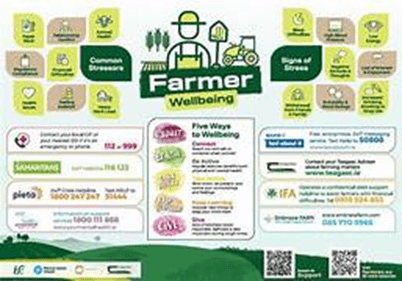
The Farmer Wellbeing Board was designed to provide on-site information about various helplines and agencies that offer support to those in need in times of crisis. It is a visual signpost for farmers on where to reach out for help.
Sowing Seeds of Support: Positive Mental Health Guidance for the Farming Community. Farming can be challenging due to issues such as drought, fodder shortage and associated financial issues. There are many issues in farming that can cause stress and associated ill health and injury. Research shows a high satisfaction and quality of life associated with countryside living. Individual circumstances can arise however which lead to stress.
If you would like to know more, you can contact Finola at finolacolgancarey@LinkedIn
Read the ‘Your Guide to Targeted Agricultural Modernisation Schemes (TAMS 3)’ booklet here to find out which safety measures are supported under TAMS 3