Framework for enhanced agroforestry implementation in Europe
The innovation addresses gaps in the understanding and uptake of agroforestry in Europe. The primary challenges preventing farmers from implementing agroforestry practices include tradition, a lack of knowledge, the perceived complexity of agroforestry management compared to conventional farming, and administrative, technical, and financial barriers to planting trees. Furthermore, a significant problem is that while agroforestry is a permanent land use change, funding schemes are often short-term, which fails to incentivise farmers. This project sought to understand these barriers and quantify the opportunities for integrating trees in agricultural landscapes.
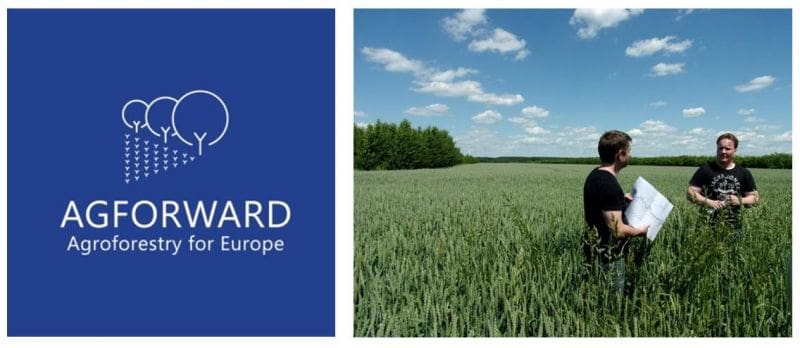
The AGFORWARD project delivered an environmental and socio-economic framework to understand the context of agroforestry across different European regions. This framework provides a holistic view of the benefits, costs, challenges, and risks of implementing agroforestry systems by capturing the experiences of farmers. Its importance lies in its potential to help identify key challenges and questions to enhance the adoption of agroforestry. The framework can be used to inform the development of appropriate policy interventions, such as longer-term supports, farmer education, and training. By increasing understanding among farmers and advisors, it can help create the right conditions for adopting innovative agroforestry business models. The report on this framework is open access and available on the AGFORWARD project website.
The framework is highly relevant for Ireland as it was developed using insights from regions with similar agricultural climates, including Northern Ireland and Brittany, France, making the results transferable. The integration of agroforestry on farms aligns directly with Key Strategic Action (KSA) 8 (Innovation and Diversification) of Ireland’s National Strategy for Horticulture 2023-2027. The framework can be used to identify suitable policy and scheme interventions for an Irish context, supporting systems like fruit production, hedgerows, and the integration of trees with crops. Stakeholder organisations like the Irish Agroforestry Forum are active in this area and could play a key role in disseminating and applying the framework’s findings in Ireland.
This information helps farmers understand the potential benefits and challenges of agroforestry as perceived by their peers. Farmers can learn about the positive impacts experienced by others, such as environmental benefits, reduced need for pesticides and fertilisers, production of higher quality crops and timber, diversified income streams, and increased farm profitability. The framework provides farmers with a clearer understanding of the steps toward adopting agroforestry, including building awareness and perceiving the innovation as feasible, worthwhile, and aligned with their objectives. Farmers interested in this topic can review the detailed framework, which is openly available on the AGFORWARD website, to assess the opportunities for their own enterprises.
Find out more about this innovation by contacting Leo on leo@erinn.eu.