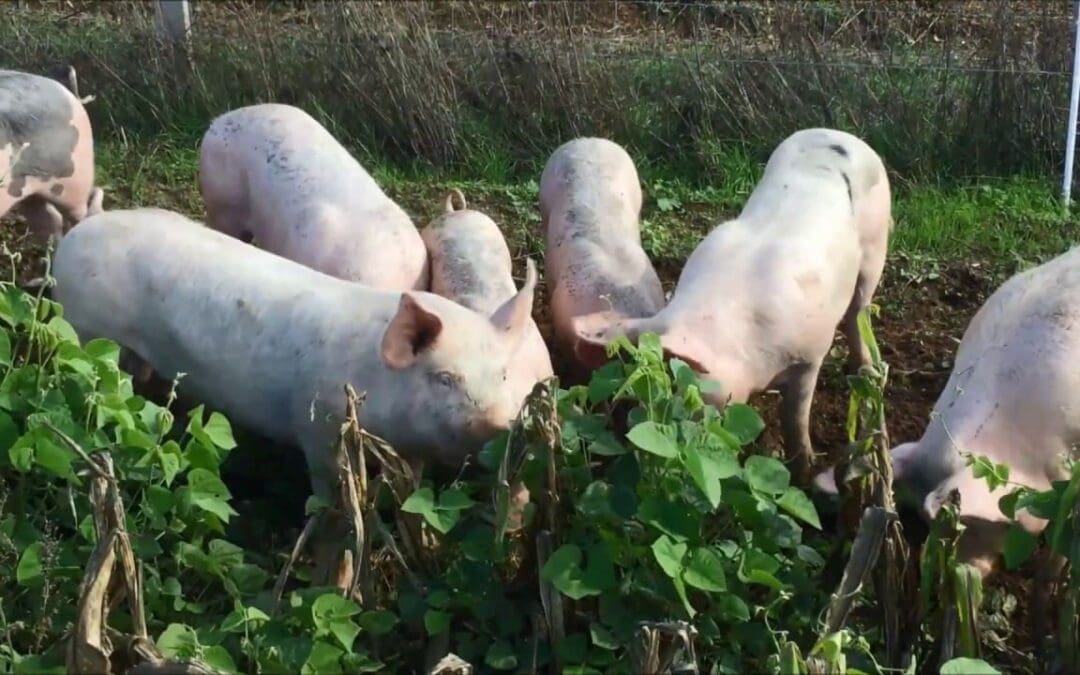
EU Project provides supports to feeding pig and poultry organic and regionally produced feed
OK-Net EcoFeed aimed at helping organic pig and poultry farmers in achieving the goal of 100% use of organic and regional feed.
The 3-year project created a European network of innovation groups to facilitate exchange and co-creation of knowledge among farmers, business actors, researchers and advisors. It collected end-user material and developed new tools adapted to the needs of farmers and business actors.
The project also contributed to the development of an online organic farm knowledge platform. OK-Net EcoFeed was coordinated by IFOAM EU and consisted of 11 partner countries (not including Ireland).
OK-Net EcoFeed included the construction of a research and innovation agenda on the topic of organic feed production for monogastrics. Data and information for this agenda were gathered through:
- Innovation Groups inputs
- A knowledge synthesis
- A scientific review on alternative protein sources
- Discussion forum on the Organic Farm Knowledge Platform. (organic-farmknowledge.org)
- Results of testing in Innovation Groups
Through these methods, a variety of topics were identified where further scientific studies are needed to propose new solutions to problems or challenges in organic feed production for monogastrics. These challenges include:
- Amino acids: Researching the content, availability, and digestibility of amino acids in novel feed ingredients.
- Animal research: Investigating breeds better suited for organic systems, focusing on longevity, foraging behaviour, slow growth, and dual-purpose traits.
- Crops, side streams and residues: Researching the nutritional value and digestibility of new feedstuffs, optimizing crop and silage mixes, assessing animal health with new feeds, improving existing feed quality via plant breeding, developing seeding techniques (e.g., turnips), and creating technology for local feed nutritional analysis.
- New protein sources: Exploring the inclusion of starfish and green protein in monogastric diets, enhancing the quality and sustainability of mussel meal and green protein processing, and studying the efficiency and environmental impact of insect rearing diets.
- Antinutritional factors (ANF): Developing on-farm ANF analyses and researching ANF treatment methods (e.g., heating)
- Technology and infrastructure: Developing small-scale on-farm post-harvest equipment, automatic silage distributors, and techniques to identify heat damage in locally processed soybean to improve feed utilisation.
- Foraging and management: Exploring regional opportunities for combining breeds, feeding, foraging strategies, and management.
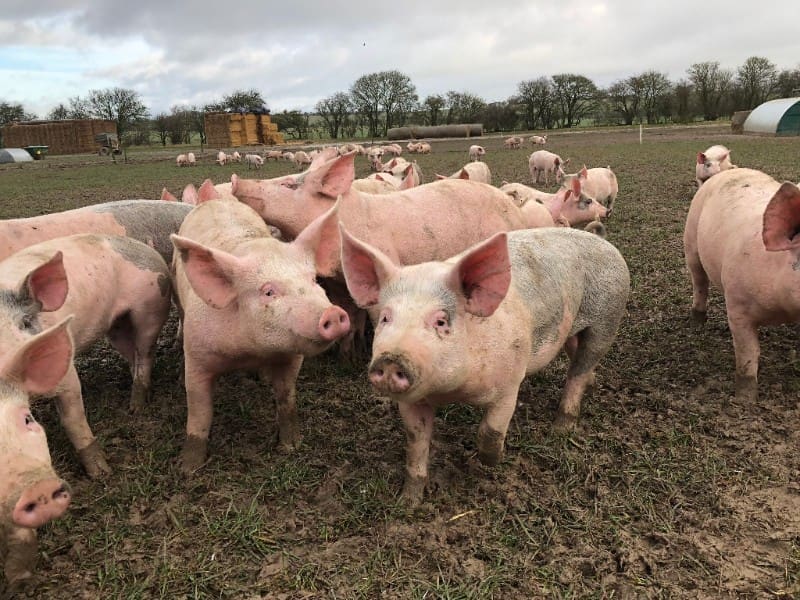
The knowledge synthesis demonstrates and aims to support the challenge of sourcing enough protein and specific amino acids, in feeding pigs and poultry 100% organic and regionally produced feed. The OK-Net EcoFeed project suggested two solutions which can help support farmers to feed monogastrics regionally produced feed. These are:
- The use of by-products (e.g., waste from various productions) and new protein sources which can be grown regionally (e.g., marine products or refinement of already known products, such as grass).
- Less intensive feeding strategies and use of slow-growing breeds (including those that are already known as well as rediscovered old breeds).
As evident from the report, slow-growing and less-yielding breeds present an economic and productivity challenge. However, there are possibilities for combinations of regionally grown feed, and low-yielding breeds with different feeding strategies. The knowledge synthesis report is available to download from the project website.
The OK-Net EcoFeed has shown that further research is needed in a number of areas before 100% use of organic and regionally produced feed can be achieved for monogastric farmers.
Find out more about this innovation by contacting Claire Kearney at claire@erinn.eu.